YES! Teaching your dog what it means
“Yes” is typically the first thing I teach a dog. Before we work on sit, stay or walking together, I want us to have a clear way to communicate: that moment right there is something I’m going to reward.
A clicker can do the same job. First, your dog needs to learn what that sound means.
Teach the first “yes” · Use it in a lesson · Get the timing · When you get stuck
Choose a sound your dog is comfortable with
I use “yes”. You can choose another short word or use a clicker. Whichever you choose, give it a consistent meaning: a reward follows.
If you choose a clicker, introduce the sound at a comfortable distance instead of clicking it right beside your dog’s face. Some dogs find the sound startling. If your dog is worried by it, use a comfortable spoken “yes” instead.
You can see how I introduce the clicker’s sound in this lesson. You don’t need a clicker to do this training, though!
Teach the first “yes”
Find a quiet, familiar place where your dog is comfortable and interested in interacting with you. Have small pieces of food ready that your dog enjoys and can eat easily. At this stage, we’re just connecting the sound with the reward.
- Say “yes,” or click, then give your dog a treat.
- Let your dog finish the treat. Pause, then do it again. Keep the order clear: sound, then reward.
- Watch your dog. As the connection develops, they may look toward you or anticipate the treat when they hear the sound. Keep this easy and stop while they’re still interested.
You don’t need to ask for a sit. Your dog doesn’t have to look into your eyes or offer a particular behavior to earn these first pairings. If they happen to sit, that’s fine. The lesson right now is simply that “yes” predicts something they like.
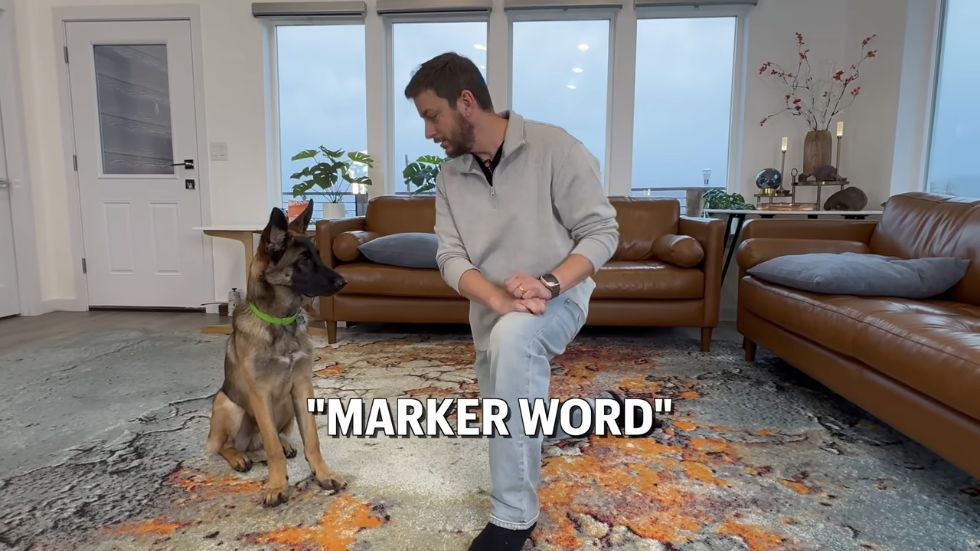
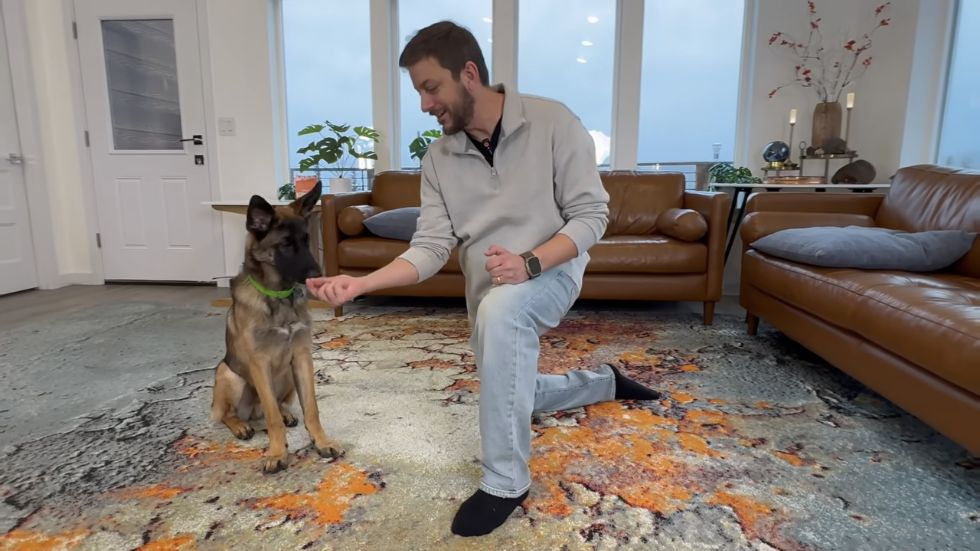
With Wallace, I start by pairing “yes” with tiny treats, without asking him to do anything. Watch how his response to the word develops.
Now show your dog what worked
Once your dog starts making that connection, you can use the sound to tell them which moment earned a reward. A voluntary glance toward you is a useful place to start. Trainers call the word or sound a marker, because it marks the moment you want your dog to notice.
- Stay close in that easy setting. Let your dog finish their previous treat and give them a moment.
- When they glance toward you, say “yes” as the glance happens.
- Follow with the reward. Let them finish, then look for another easy opportunity.
A brief glance is enough. Don’t hold out for a long stare or turn this into a test of how long your dog will look at you.
In the Wallace demonstration, you can see the change from simply pairing the sound with food to marking attention he offers on his own.
As you teach other skills, you can mark the moment your dog sits, takes a step with you or makes a small piece of progress toward something new. Choose an achievable step so there’s something clear to reward.
Get the timing clear
Your marker identifies the moment. Your reward follows it. If you’re marking a glance, say “yes” when your dog looks toward you, rather than after they’ve already turned away and done something else.
You don’t have to deliver the treat at the exact same instant as the word. In Wallace’s lesson, there’s a short pause between “yes” and the treat. Keep the reward ready and follow through, so the sound continues to predict something good.
A cue such as your dog’s name or “sit” asks for a response. “Yes” tells your dog which moment you’re rewarding.
⚠️ Avoid using the clicker to call your dog or get their attention; I explain that distinction here. Just wait for the moment you want to mark, then mark it.
Does “yes” always mean a treat?
When I’m teaching this connection, small food rewards make it easy to practice. As you get to know your dog, a toy or a little play may be rewarding too. With Wallace, I also follow “yes” with a short game. Pay attention to what your dog actually enjoys in that situation.
The reward can vary; the follow-through stays. I consistently pair “yes” with a reward. Saying the word and then regularly offering nothing would change the connection we’ve been teaching.
You’ll also hear me say “good” while a dog is continuing something. In this explanation, I use it as encouragement along the way, while “yes” is the signal I follow with a reward. You can keep your first lesson simple and start with “yes.”
When you get stuck
Your dog doesn’t seem interested
First, check the reward and the situation. Is this something your dog wants right now? Is the room too distracting? Are they comfortable, or are they tired or worried? You can make the setup easier, offer a different suitable reward, or stop and try later. Repeating “yes” louder won’t make the lesson clearer.
Your dog keeps watching the food
In the first pairing exercise, your dog doesn’t need to look away from the food or hold eye contact. Say the sound, then give the treat. When you move on to marking attention, keep the goal small: a brief glance toward you, followed by a reward.
Your dog turns away or needs a break
Let them pause. In Shade’s first training session, I notice his attention changing and give him a break. Participation is part of the lesson. You can return to a quiet, easy version when your dog is interested again.
You’re trying to teach everything at once
Come back to the first connection: “yes,” then a reward. You can practice that without adding sit, stay, a hand signal and distractions in the same session. After that, choose one little success to mark.
Use it beyond a planned lesson
Keep suitable rewards safely within reach so you can notice useful choices during the day, too. A check-in, a few steps together or settling comfortably nearby can give you a chance to say “yes” and follow through. Your dog doesn’t have to wait for a formal session to learn from you.
To build from here, Dog Training 101 walks through first skills, cues, fading a visible food lure and practicing in new places. If you’d like lessons in order, start my free 30 Day Perfect Pup course.