House Training
A calm, practical plan for fewer accidents and more success.
The basic idea is simple: prevent as many accidents as you can, give your dog lots of chances to get it right, and reward them immediately when they do.
Start here: the complete process
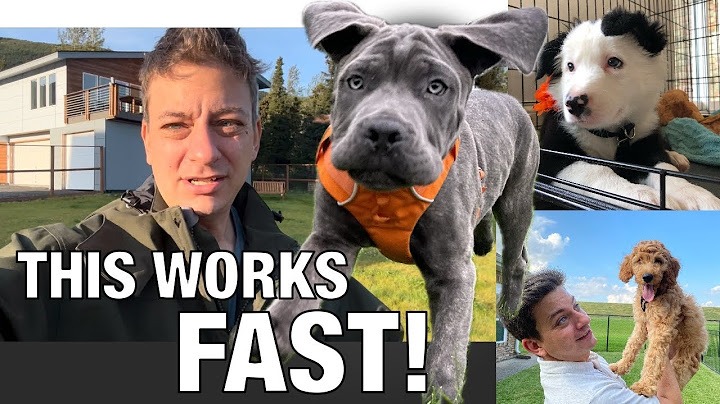
How to Potty Train Your Dog FAST!
Start with this video. It covers how to recognize signals, prevent accidents, reward the behavior you want, handle pads or apartment living, respond to setbacks, and know when it is time to call your veterinarian.
What to do today
1. Choose a practical toilet location
Pick a place you can reach consistently. An outdoor location may be ideal for many households, but pads or indoor grass systems can also be reasonable accommodations for apartments, severe weather, mobility limitations, health needs, or an individual dog’s circumstances.
2. Make accidents less likely
When your dog is loose indoors, keep them close enough that you can notice sniffing, circling, wandering away, or other changes that may signal they need to go. When direct supervision is not possible, use a safe, comfortable, puppy-proofed area that your dog has been introduced to positively.
3. Offer frequent opportunities
Take your dog to their chosen location after waking, eating or drinking, active play, excitement, confinement, and changes of place.
4. Keep the POTTY BREAK calm
Give your dog enough time to settle and investigate. If they’re too distracted to go, return indoors with close supervision and try again shortly rather than giving them unrestricted freedom.
5. Reward immediately
Reward your dog as soon as they finish! Keep those treats handy when you’re in the early stages of potty training. Waiting until you are back inside can accidentally reward coming through the door instead of eliminating outside.
6. Add a cue if it’s useful (Trust me, it is!)
Say the same brief phrase as your dog begins to go – not before. With repetition, that phrase can become a very useful cue!
7. Expand freedom gradually
Reliable behavior in one room does not automatically mean your dog understands the whole house. Increase access in small steps after sustained success. If accidents return, reduce their freedom temporarily and adjust the plan without shame or punishment.
When an accident happens
- Do not yell, startle, punish, or rub your dog’s nose in it, etc.
- If you notice an accident beginning, calmly guide your dog to the correct place when it’s safe and practical.
- If you discover an accident afterward, clean it without drama. Use an enzymatic cleaner to help remove residual odor.
- Consider: Was the interval between breaks too long? Did your dog have too much unsupervised freedom? Did a routine, environment, diet, medication, or health condition change?
- Adjust the next opportunity so the accident is less likely to happen again.
Troubleshooting
They go immediately after coming back inside
Stay outside a little longer when possible, keep the outing calm, and limit unrestricted indoor freedom if they did not go. Return to the toilet area after a short, closely supervised interval. Reward immediately when they succeed.
They were doing well, then regressed
Regression can follow changes in routine, environment, weather, stress, access, or health. Temporarily return to the earlier level of supervision and frequency that was working. If the change is sudden or difficult to explain, contact your veterinarian.
They understand one room but not the whole house
Dogs do not always generalize a rule automatically. Treat each new room or home as a new level: supervise closely, give them more than enough opportunities to go in the “right” location, and expand access gradually and methodically.
Inertia once had a potty accident on an outdoor porch while we were away from home, after a long stretch without one. I could only guess whether the unfamiliar indoor/outdoor setup or smells from other dogs had played a part. What I could change was my supervision and the help I gave her in that new place. Read what happened. For a trip or a visit, read how to help your dog in a new place.
We live in an apartment or cannot get outside quickly
Plan around the actual environment rather than an imaginary ideal. More frequent scheduled trips, a nearby designated area, potty pads or an indoor grass system may be appropriate. Choose a system and introduce your dog to it deliberately, and make the correct location easy to reach and heavily reinforced.
My dog urinates during greetings or when frightened
Excitement- or fear-related urination is not ordinary house-training defiance. This is most common with younger dogs, and they typically grow out of it with patience and experience. Do not scold your dog when this happens! Keep greetings low-key, bring them outside for a potty break just before guests arrive, avoid looming over your dog when greeting, and discuss persistent or worsening cases with your veterinarian or a qualified reward-based behavior professional.
Accidents happen only when they are left alone
Elimination or destruction during absences can be connected to distress rather than incomplete house training. See the Separation Anxiety resource and consider professional veterinary or behavior support.
Watch next
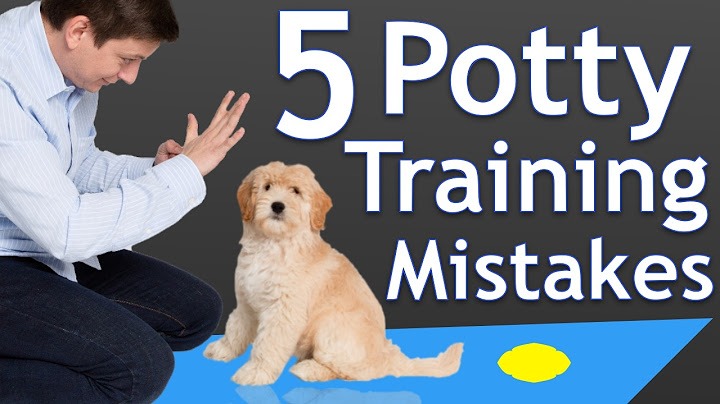
The 5 Most Common Potty Training Mistakes
This is a quick reset if you feel stuck. House training rarely happens in a week. Punishment can create fear or hiding, access needs to be managed, and a new dog cannot be expected to ask clearly before the routine has been taught.
This is an older video. My more recent guidance is more flexible about pads and indoor toilet options!
What a difficult real case looks like
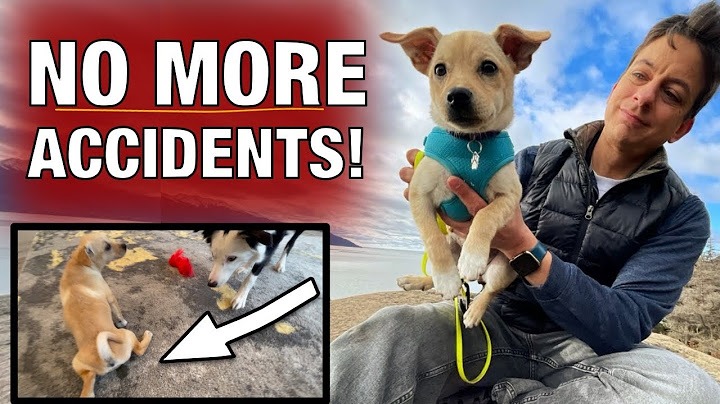
Biscuits was one of our hardest house-training cases, and the progress was not linear. This video looks at how much freedom she had, how often she went outside, crate discomfort, setbacks, changes to the environment, and possible medical causes.
More examples and optional skills
- The Complete Guide to Potty Training Your Puppy
- Teach Your Dog to Ring a Bell to Go Outside
- Everything You Need to Know About Potty Training
- The Secret to Potty Training Your Puppy
Chewing and household destruction
These cover a related problem, but they are really a separate topic. Use the Chewing + Household Destruction guide for a dedicated plan.
Want a complete foundation plan?
30 Day Perfect Pup includes guided lessons on crate and potty training, attention, recall, leash skills, and other everyday foundations. Follow the full plan or focus on the skills your dog needs most.
When a change may not be a training problem
Contact your veterinarian if a previously reliable dog begins having accidents suddenly, if the frequency changes unexpectedly, or if you notice pain, blood, increased thirst, difficulty moving, or other physical or behavioral changes.
Repeated straining with little or no urine can be an emergency. Seek urgent veterinary care.