Puppy Biting
Here’s how to help your puppy learn what to do with that busy little mouth.
Puppy biting is normal! But obviously, it can still be exhausting… and painful.
First, put yourself in your puppy’s place. We are asking a LOT of a little baby animal who has only been on this earth for a few weeks!
Your main goal is to prevent the wildest moments, teach better choices, and make it easy for everyone to stay calm. If you’re thinking “Easy for you to say, Zak!!” … keep reading. I promise this will help.
When teeth land on you
If teeth land on skin or clothing, become still and offer a toy when possible. If your puppy keeps grabbing at you, briefly step behind a barrier. The pause should be calm and predictable, not scary. Then give the puppy another chance when everyone is ready.
Move a toy in a way that makes it interesting and reward the puppy for engaging with it. If the puppy is grabbing hands, sleeves, or ankles, avoid turning your body into an even more exciting wrestling toy.
In this lesson with Inertia, I use food to help her move away from my shoelaces, then ask for a familiar sit or lie down. Later, I reward a single step of walking without grabbing the laces. Practice those small pieces before expecting a whole walk without biting.
If your puppy keeps coming back to your hands or clothing, make the environment quieter and take a calm break. A barrier can protect your hands while you stay nearby; do not leave a distressed puppy alone to wait out the biting. They may need a toilet break, a low-key activity, or sleep. Repeating the same redirection while everyone gets more frustrated is a cue to change the setup.
Notice gentle play, choosing a toy, relaxing near you, licking instead of biting, and responding when you call them away. Reward those quiet moments, too.
Do not hit, yell, grab the muzzle, pin the puppy, or use an “alpha roll.” I want the puppy learning safe ways to play and communicate without pain or fear.
Look for the pattern
Notice what happens before the biting gets intense. Is your puppy tired, overstimulated, hungry, frustrated, teething, trying to play, or reacting to fast movement? A simple note on your phone can help you see when to intervene earlier.
Keep toys and appropriate chews near the places where biting usually happens. Offer a toy, sniffing activity, toilet break, or quiet rest before the puppy reaches the most frantic part of the episode. Gates and pens can give everyone space without a confrontation.
My puppy attacks ankles or pant legs
Fast feet and loose fabric can be irresistible. Slow down, keep a toy nearby, and redirect before the puppy makes contact. If walking itself triggers the game, use a gate or pen to create a little space while you practice short, calm repetitions.
The biting gets much worse at night
Look at the whole day. The puppy may need a toilet break, a calmer activity, or help settling for sleep. Try intervening earlier in the evening rather than waiting for the wildest moment.
My puppy bites during brushing, nail care, or handling
Stop forcing the interaction. Break the task into much smaller pieces and pair each step with something the puppy values. Pain or discomfort can also affect handling, so talk with your veterinarian if this is new, intense, or connected to a particular body area.
My puppy guards food or objects
Do not chase, corner, pry an item away, or repeatedly take it to test your puppy’s response. Keep people and other animals away while the puppy has it. Freezing, hard staring, growling, snapping, or escalating guarding need a different plan from play biting. Get qualified reward-based help. If something dangerous is involved, contact your veterinarian promptly and avoid reaching into the puppy’s mouth.
When to get individual help
Use gates, pens, distance, or another safe barrier if anyone feels unsafe. Contact your veterinarian and a qualified reward-based behavior professional if the biting suddenly changes, repeatedly breaks skin, happens around guarding or handling, appears connected to pain or fear, or is becoming harder to predict or manage.
Children and puppies need active adult supervision. If you cannot supervise, separate them safely rather than asking either one to manage the interaction alone. It’s your responsibility to teach both your puppy, and your child!
If the plan is not becoming easier to manage, review sleep, exercise, enrichment, health, and when and how often biting happens with your veterinarian and a qualified reward-based professional.
WATCH MY PUPPY LEARN NOT TO BITE, FROM START TO FINISH!
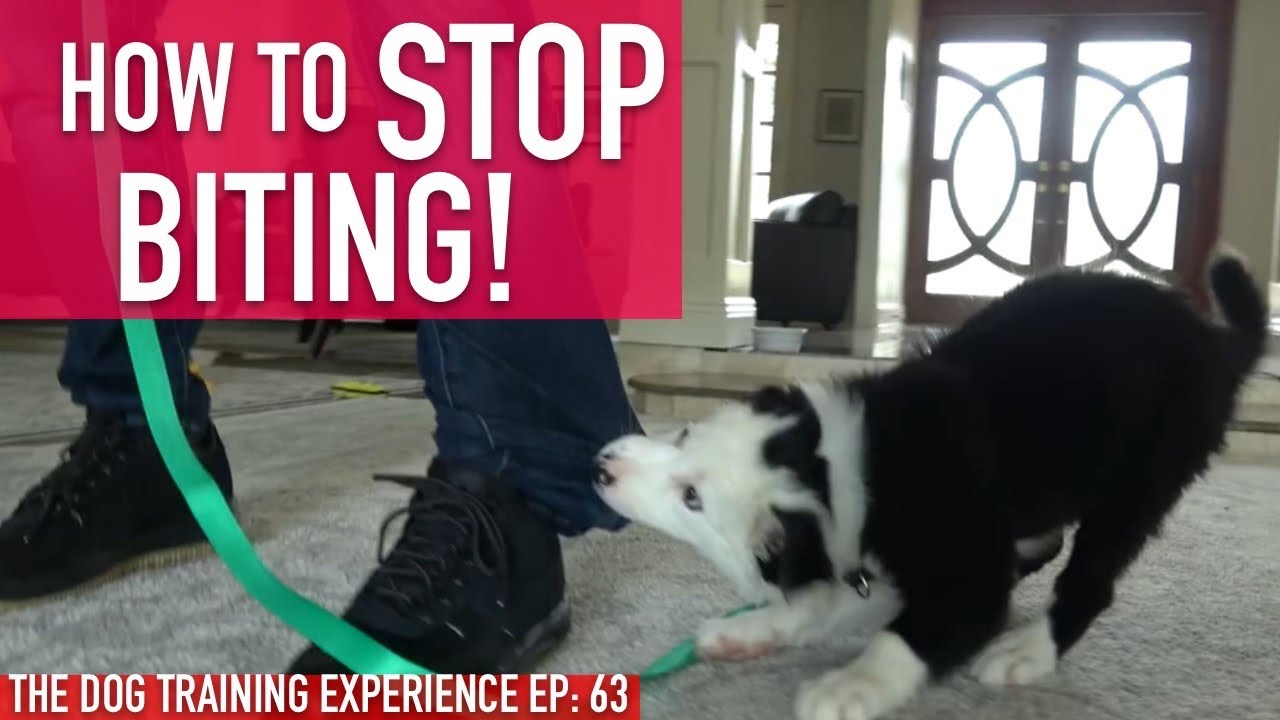
HOW LONG DID IT ACTUALLY TAKE?
Hands, clothes, and shoelaces do not all become easy at once. This lesson follows the small changes across different stages of Inertia’s puppyhood, including what I try when a toy is not enough.
For a newer example, watch what I do when Shade starts chewing my shoe. I call him over, put the shoes out of reach, and offer a chew with a similar texture. Giving him an appropriate thing to chew and putting the shoes away work together.
Want daily help and guidance from me? 30 Day Perfect Pup brings the puppy foundations together.
For another question, browse Training Help or read the evidence behind my approach.