Jumping on People
Here’s how to teach your dog a calmer Greeting!
Dogs usually jump because getting close to us is exciting and jumping often works. The key to changing that is showing your dog what actually earns attention, and practicing before a real visitor arrives!
Watch thIS FOR HELP:
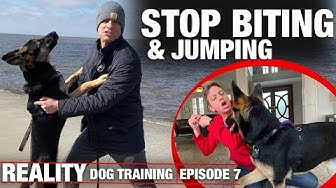
I Have to Get This Dog to Stop Biting and Jumping
Moira’s session shows what it looks like when jumping is part of a larger burst of puppy excitement. I work on communication and better choices in the middle of a real training day in this video!
What to do today
1. Choose a clear greeting rule
Four paws on the floor is a practical default. A sit can be useful, but it does not have to be the only acceptable choice. Decide what your household can reinforce consistently.
2. Manage the first burst of excitement
Before opening the door, have treats ready and use a barrier or leash if needed. Give your dog enough distance to notice the person without immediately launching at them.
3. Reward before the jump
Mark and reward the moment your dog keeps four paws down, looks at you, or approaches calmly. Deliver the reward low enough that your dog does not have to jump to reach it.
4. Teach an alternate
A hand target, sit, finding treats on the floor, or going to a mat can give your dog something concrete to do during time when they’d typically jump.
5. Generalize slowly
Practice with different people, locations, clothing, movement, and levels of excitement levels. A dog who greets you calmly in the kitchen may still need help when a favorite friend comes through the front door.
THINGS TO avoid
- Do not knee your dog in the chest, step on their feet, shove them down, or yell in their face.
- Do not let some greetings become a wrestling match while expecting perfect stillness in others.
- Do not expect visitors to improvise or train your dog for you.
- Do not force a greeting. Some dogs are more comfortable observing from a protected space.
Troubleshooting
My visitors keep rewarding the jumping
Use management instead of hoping everyone remembers. Keep your dog behind a gate or on leash while you explain the plan, then invite a brief greeting only when you are ready. It is okay to skip the greeting entirely.
My dog jumps only when they are extremely excited
Practice at lower levels of excitement first. Add distance, shorten the greeting, scatter a few treats on the floor, or use a mat before the person comes closer. The lesson should become gradually harder, not jump from calm practice to the biggest possible challenge.
My dog jumps on strangers during walks
Do not allow surprise greetings while the skill is developing. Create space, keep moving, or tell the person that your dog is training. Practice with a helper who can approach and retreat predictably.
My dog jumps and mouths at the same time
Lower the excitement and use a barrier before trying again. A toy may help some dogs redirect their mouth, but frantic or escalating mouthing needs more than a greeting drill. See the Puppy Biting guide and seek professional help if anyone feels unsafe.
My dog jumps when I hold treats
Keep the food out of reach and deliver it low when four paws are down. You can also place or toss the reward on the floor. If the food itself creates frantic behavior, practice with less exciting rewards in an easier setting.
Related help
Jumping often overlaps with puppy mouthing and overexcitement on leash.
Want a complete foundation plan?
30 Day Perfect Pup includes guided lessons on attention, recall, leash skills, crate and potty training, and other everyday foundations. Follow the full plan or focus on the skills your dog needs most.
Keep exploring
See the research and welfare principles behind my approach, or return to the full training library.