Leash Pulling
Build a walk that works for both ends of the leash.
If you’re building the basics, my free 30 Day Perfect Pup course gives you a guided foundation for paying attention, coming when called, and walking together. Follow the lessons at your dog’s pace.
First steps · Help with pulling · Sniffing and exploring · U-turns
Watch Inertia’s progress over a year
This video brings together a year of teaching Inertia to walk on leash, starting indoors and gradually taking the lesson outside. During those early sessions, we didn’t need to get anywhere; a few steps together were enough.
Jump into the lesson: first steps indoors (4:12) · moving outside (7:13) · distractions and distance (10:13).
A few steps are enough to start
Choose a quiet, familiar place to start. Your living room is probably a good choice!
If even the equipment is new, let your dog investigate it and reward comfortable participation before building up to actually wearing it. Pause if your dog backs away or freezes, or otherwise seems unsure. Watch how I introduce Wallace’s harness.
Once you’re ready to walk:
- Invite one or two steps. With the leash loose, offer a treat near your leg and invite your dog to follow. Say “yes” as they move with you, then reward beside you. Once they understand the movement, reward from your other hand or pouch so they don’t need to see food first.
- Reward before the leash tightens. Notice a check-in, a turn toward you, or a few steps with slack. Mark that moment with “yes” or a click, then reward. Take a few steps and reset; build distance, duration, or distraction gradually.
- If the leash goes tight, don’t yank back. Pause if it is safe, or invite your dog to turn away from the distraction. Reward when slack returns. If you keep stopping every few steps, practice somewhere easier and reward sooner. Don’t pull/drag a frozen or reluctant dog along.
- Take the same small lesson outside. When it feels easy indoors, try the yard or driveway. Let your dog sniff and observe first. Keep practice short and meet potty and exploration needs separately.
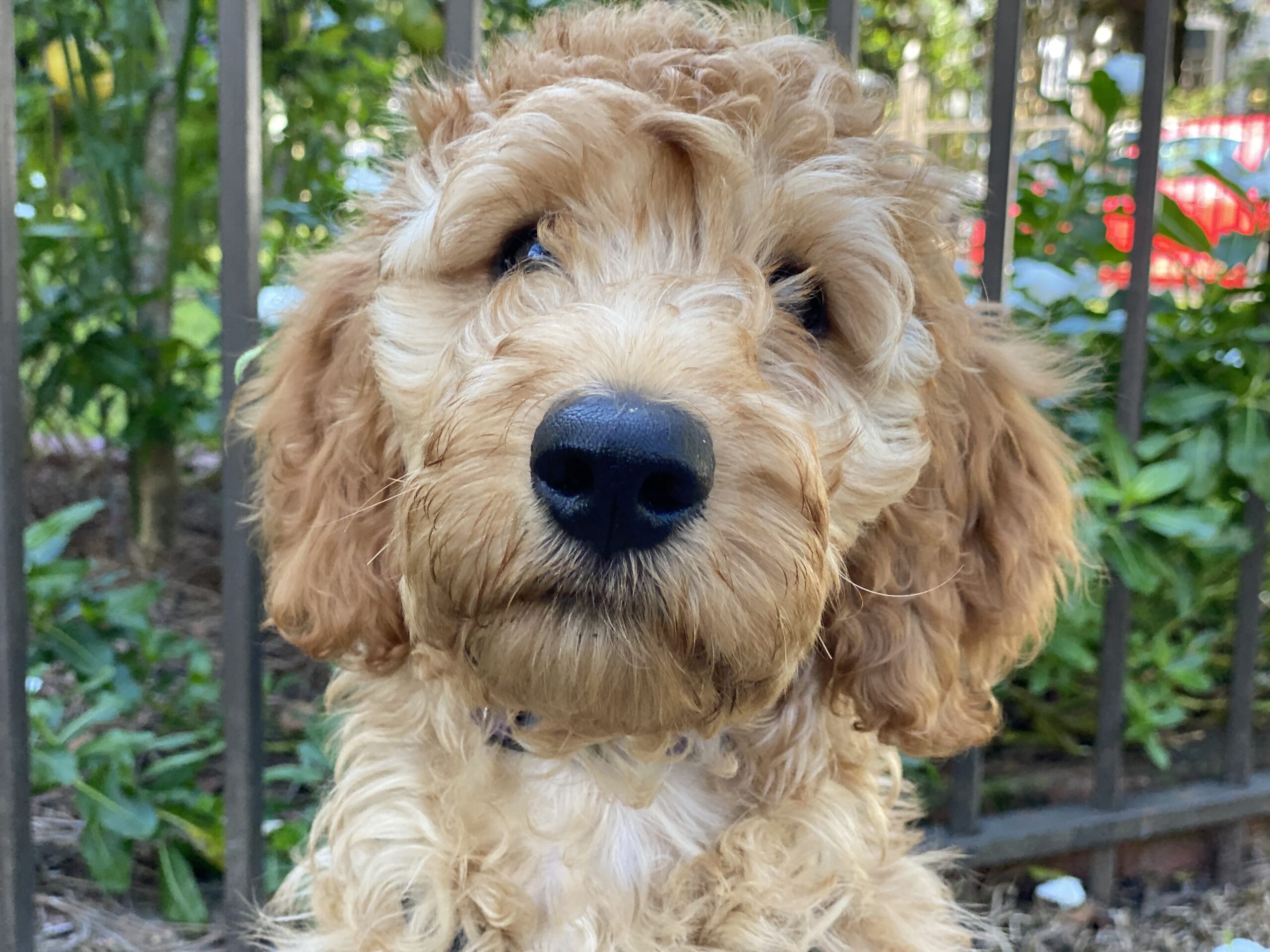
With Kona, a toy caught her interest when food wasn’t doing much for her. Watch me use play in her first leash lesson (6:22). The reward needs to be something your dog actually wants.
When the walk gets difficult
My dog pulls from the second we leave the house
Practice the first few steps before the full walk. Reward calm movement near the door, step outside briefly, and come back in before excitement takes over. A short training loop can be more useful than rehearsing a long pull down the street.
Why is walking harder outside, and what if my dog won’t take food?
Your dog is still learning to walk with you in different places. The environment may be too difficult, or food may not be the right reward in that moment. Choose a quieter location, move farther from distractions, or practice for a shorter distance or session before making it harder. You can also use safe access to sniffing and movement as reinforcement.
How do I walk more than one dog?
Start with individual walks so you can learn what distracts each dog, reward at the right moment, and adjust without managing another dog. I wrote about why I start with separate walks.
Once each dog is comfortable, try a brief shared walk in an easy place, with a second handler if possible. If one dog’s excitement makes it hard for either to reconnect with you, return to individual practice and make the next shared outing easier.
Barking and lunging at dogs, people, or vehicles need more than loose-leash practice. Create distance, avoid crowded routes and forced greetings. Fear and frustration need to be addressed in the plan. Start with this reactive-dog video guide for help choosing distance and working on how your dog feels about those encounters.
Leave room for sniffing
Sniffing and exploring are part of a good walk for your dog! Give them regular chances to choose a direction, investigate a smell, and move at their own pace where it is safe. Returning to a smell can reward a short practice stretch, but your dog does not have to earn every opportunity to explore. They don’t need to stare at you every second.
With Inertia, our casual morning and evening walks gave her room to get to know the world while she was still learning leash skills. I wrote about why every walk did not need to become a training lesson.
Watch Wallace’s decompression walk on YouTube. I look at rest, our surroundings, and what he finds rewarding. If walks repeatedly leave your dog overwhelmed, changing the route can be the most useful first step.
For a longer-leash example, watch Inertia’s free walk in Alaska (3:02). I reward the check-ins she offers. Use only as much leash as you can safely manage, within local rules and away from traffic and other trail users. On this hike with Wallace, I adjust the length to our surroundings.
Ready to move on from a smell? Practice “let’s go” when your dog is already about to move with you, then reward. Give them a fair chance to investigate safe smells, and practice around easy ones first. Repeating the cue while they’re absorbed won’t explain it. Watch my sniffing lesson (7:52).
Practice turning around before you need to
In this U-turn lesson with Wallace, I teach the turn before using it around difficult distractions. Start somewhere quiet: say “this way,” turn slowly, and invite your dog to follow your hand for a couple of steps. Reward them for coming along. Practice a quicker turn as it becomes familiar. Keep the leash loose; your cue and movement explain the turn, not a jerk.
On walks, turn early enough that your dog can still respond. If they’re already barking or lunging, focus on getting space safely. Return to easier practice later instead of repeating the cue or insisting on a perfect turn.
Equipment and keeping control safely
Use secure, well-fitted equipment and practice somewhere you can keep your balance and create distance from traffic, dogs, wildlife, or other difficult distractions. Equipment can support safety, but no collar or harness teaches the skill by itself.
If your dog can pull you down, escape their equipment, or lunge toward people, animals, or vehicles, choose safer locations and get hands on help from a qualified reward-based professional. Ask your veterinarian about equipment if your dog has pain, breathing concerns, or another medical issue.
I don’t use leash pops/jerks, prong collars, choke chains, shock collars, or intimidation to teach this because science shows us that those methods are counterproductive when we’re trying to change our dogs’ behavior. Read more about the evidence behind reward-based training.
For guided foundation lessons, try 30 Day Perfect Pup.
You can also browse all training topics.